The Medical Device Industry Is Entering Another AI Wave
Artificial intelligence has become the dominant narrative in healthcare technology.
Every week brings a new announcement: AI-assisted diagnostics, predictive systems, automated documentation, smart monitoring, and intelligent workflows.
The promise is compelling. Faster decisions. Lower operational burden. Better outcomes.
But there is a problem hiding underneath much of the excitement.
AI can optimize a workflow. It cannot rescue a bad one. And in medical devices, that distinction matters far more than many companies realize.
Across hospitals, homecare environments, and digital health platforms, some of the biggest usability failures are not caused by missing intelligence. They originate much earlier, inside the structure of the product itself: confusing interactions, fragmented interfaces, unclear physical ergonomics, poor integration into clinical routines, or workflows designed around technology instead of people.

In other words, if the architecture is weak, adding AI often amplifies complexity instead of reducing it.
Healthcare Workflows Are Physical Before They Are Digital
Many discussions around AI in healthcare focus almost entirely on software. But medical devices do not exist inside presentations or dashboards.
They exist in real environments:
- crowded hospital rooms
- ambulances
- operating theaters
- homecare settings
- stressful emergency situations
- environments with fatigue, interruptions, noise, and limited time
A workflow is not just a sequence of digital actions.
It is the interaction between people, hardware, software, environment, and timing.
This is why some highly advanced systems still generate frustration despite sophisticated technology. Because intelligence layered on top of friction is still friction.
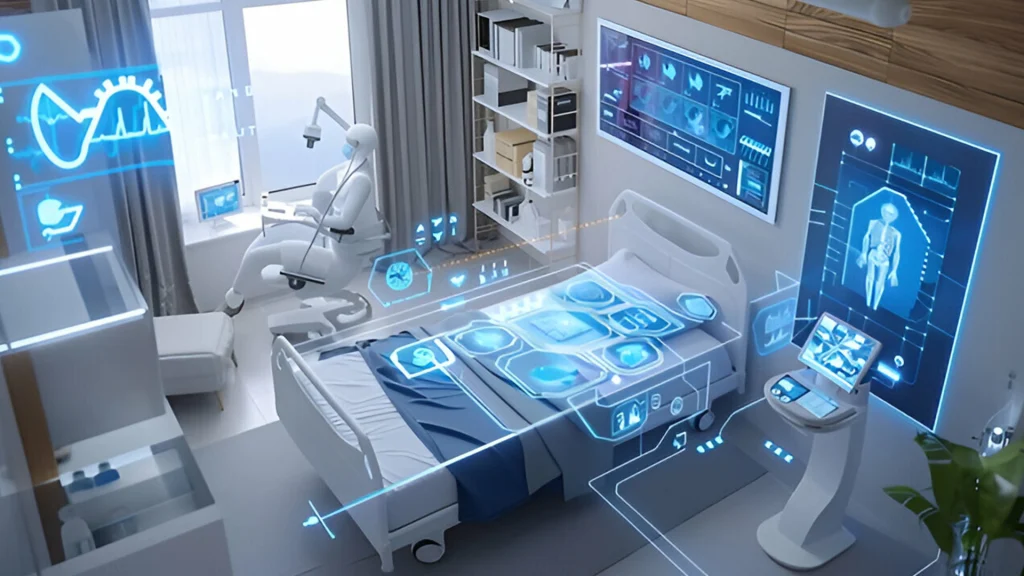
Research from the World Health Organization and multiple human factors studies continues to highlight how usability problems contribute to clinical inefficiencies and use-related risks in healthcare environments. AI does not remove those foundational constraints. In many cases, it increases the cognitive load if the interaction model is already unclear.
A Confusing Workflow Becomes More Confusing with AI
There is a recurring misconception in product development: “If we add intelligence, the experience will become simpler.” Sometimes the opposite happens.
A poorly designed workflow combined with AI often introduces the following:
- additional validation steps
- unclear responsibility boundaries
- excessive alerts and notifications
- opaque decision-making logic
- user distrust
- training difficulties
- regulatory complications
In regulated industries, opacity becomes particularly dangerous. If clinicians or operators cannot easily understand what the system is doing, trust deteriorates quickly. And once trust disappears, adoption slows down regardless of technological sophistication.
This is especially visible in connected devices and digital health ecosystems, where interoperability, data interpretation, and cybersecurity already create operational complexity. The result is paradoxical: systems designed to reduce workload sometimes increase mental fatigue.
Human Factors Still Matter More Than Buzzwords
The medical device sector has spent decades developing methodologies around usability engineering and human factors for a reason. Standards such as International Organization for Standardization 62366 were not created to slow innovation. They exist because healthcare products interact with humans operating under pressure.
A device can have exceptional AI capabilities and still fail because
- the setup takes too long
- alarms are confusing
- maintenance is unintuitive
- cleaning procedures are impractical
- onboarding is difficult
- physical ergonomics create fatigue
- the workflow interrupts clinical routines
These are not secondary details. They are often the real determinants of adoption.
Interestingly, many successful healthcare products appear technologically “simple” from the outside. What makes them effective is not necessarily the sophistication of the algorithm but the clarity of the experience. Good design frequently feels invisible.
The Risk of Designing Around the Algorithm
One of the biggest strategic mistakes in MedTech today is allowing the AI feature to become the center of the product architecture. This often creates products that are technically impressive but operationally fragile.
The better approach is usually the reverse:
- Understand the clinical workflow
- Identify friction points
- Simplify interactions
- Clarify responsibilities
- Reduce unnecessary cognitive load
- Then evaluate where AI genuinely creates value
The distinction is subtle but critical. AI should support the workflow.
The workflow should not become subordinate to the AI. This is particularly important in homecare and remote monitoring environments, where users may not be trained professionals. A hospital can sometimes compensate for complexity through training and procedures. A patient at home usually cannot.
Regulatory Pressure Is Moving in the Same Direction
The industry conversation is also shifting.
Recent discussions around the European Commission AI Act, FDA guidance on AI-enabled systems, and cybersecurity requirements increasingly focus on transparency, risk management, explainability, and human oversight.
The underlying message is becoming clearer: innovation alone is no longer enough.
Companies must demonstrate that advanced technologies remain understandable, controllable, and safe inside real workflows. This changes how medical devices need to be developed.
The challenge is no longer simply “adding AI.” The challenge is integrating intelligence without compromising usability, safety, manufacturability, maintenance, and regulatory clarity.
Why This Matters Early in Development
Many workflow problems become extremely expensive once the product architecture is already frozen.
At that stage, teams often try to “patch” usability gaps through software layers, training materials, or interface adjustments.
But structural friction rarely disappears that way.
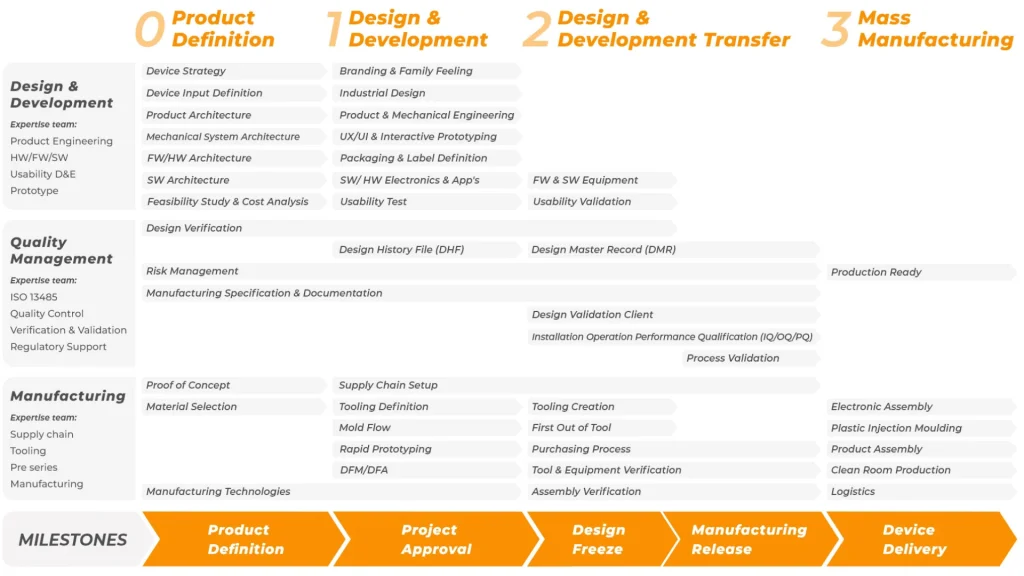
This is why workflow thinking should begin during the earliest design phases:
- system architecture
- concept definition
- user journey mapping
- ergonomic studies
- hardware/software interaction planning
- service and maintenance evaluation
- manufacturing constraints analysis
Because once complexity becomes embedded into the product ecosystem, AI tends to magnify it rather than solve it.
Better Medical Devices Start with Better Foundations
AI will absolutely reshape healthcare. There is little doubt about that. But the medical devices that will create long-term value are unlikely to be the ones with the most aggressive technological narratives.
They will be the products that integrate intelligence into workflows that already make sense.
- Clear architecture
- Understandable interactions
- Robust usability
- Manufacturable systems
- Trustworthy experiences
In healthcare, intelligence is powerful. But clarity is still foundational.
Conclusion
The future of MedTech will not be defined only by smarter algorithms. It will be defined by companies capable of combining technology with human-centered workflows, regulatory rigor, manufacturability, and operational simplicity.
Because in real healthcare environments, a good workflow amplified by AI can become extraordinary.
A bad workflow simply becomes faster at creating problems.