Why Exoskeletons Are Entering Their Most Concrete Phase Yet
For years, exoskeletons seemed stuck in an uncertain middle ground.
Too advanced to be perceived as ordinary industrial products. Too immature to become truly mainstream. But something has started to change.
The combination of labor shortages, ergonomic pressure, aging populations, and progress in sensors and wearable systems has pushed wearable robotics back into the center of industrial discussion.
Today, the sector appears to be splitting into two very different directions: human enhancement and assistive technology.
And this distinction goes far beyond marketing. It fundamentally changes how these devices are designed, validated, and manufactured.
From “Enhanced Humans” to “Supported Humans”
For a long time, the dominant narrative was about amplified human capability.
Workers lifting extreme loads. Bodies augmented by robotics. An almost superhero-like vision of industrial performance.
But the real market seems to be moving toward something far more pragmatic.
Companies are not looking for bionic workers. They are looking for systems that reduce fatigue, repetitive strain, and ergonomic risk without complicating daily operations.
And this is probably where the future of industrial exoskeletons will be decided. The most interesting products today are not necessarily the most spectacular ones.
They are often the systems that almost disappear:
- passive exosuits
- low-profile back-support systems
- lightweight semi-active structures
- soft interfaces that are quick to wear
Less “robotics.” More augmented ergonomics.
Because in real environments such as manufacturing, logistics, and assembly lines, even a few extra seconds required to wear a device can determine whether it gets adopted or abandoned.
The Real Challenge Is Not Strength. It’s comfort.
One lesson the industry is learning quickly is that mechanical performance alone is not enough.
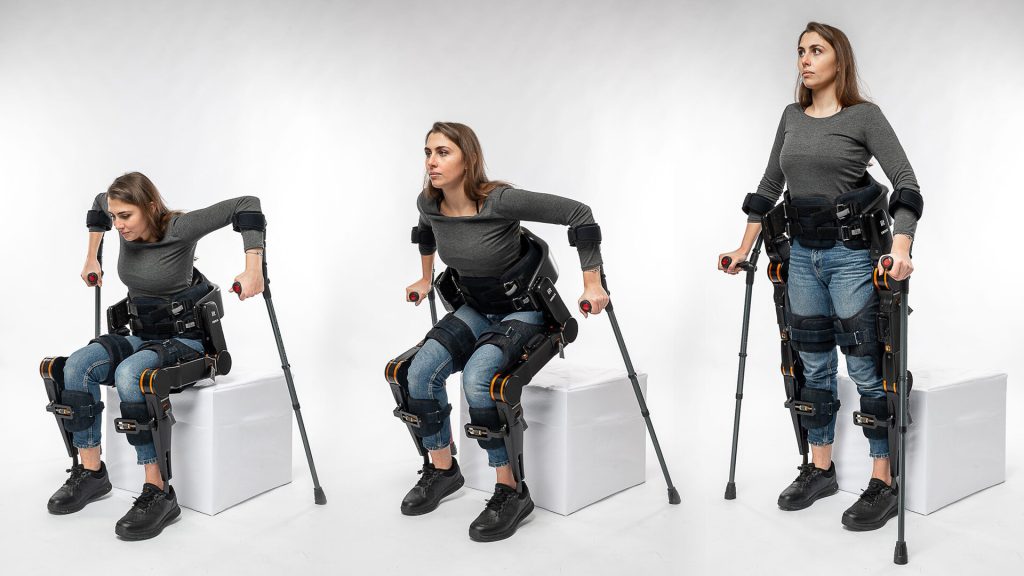
An exoskeleton may include sophisticated actuators, advanced algorithms, and refined sensors.
But if it creates pressure points, excessive heat, or movement limitations, users will eventually reject it.
This is where human factors and industrial design become central.
- Weight distribution
- Donning and doffing time
- Compatibility with PPE
- Surface cleanability
- Psychological acceptance
- Soft-rigid interface integration
Wearable robotics is beginning to discover something the medical world has understood for years: wearable devices are not evaluated only by their technology but by the long-term relationship they establish with the human body.
This is why many exoskeletons are evolving toward architectures that increasingly resemble advanced orthotics rather than traditional robots.
The Medical Path Follows Different Rules
In assistive applications, the conversation changes again.
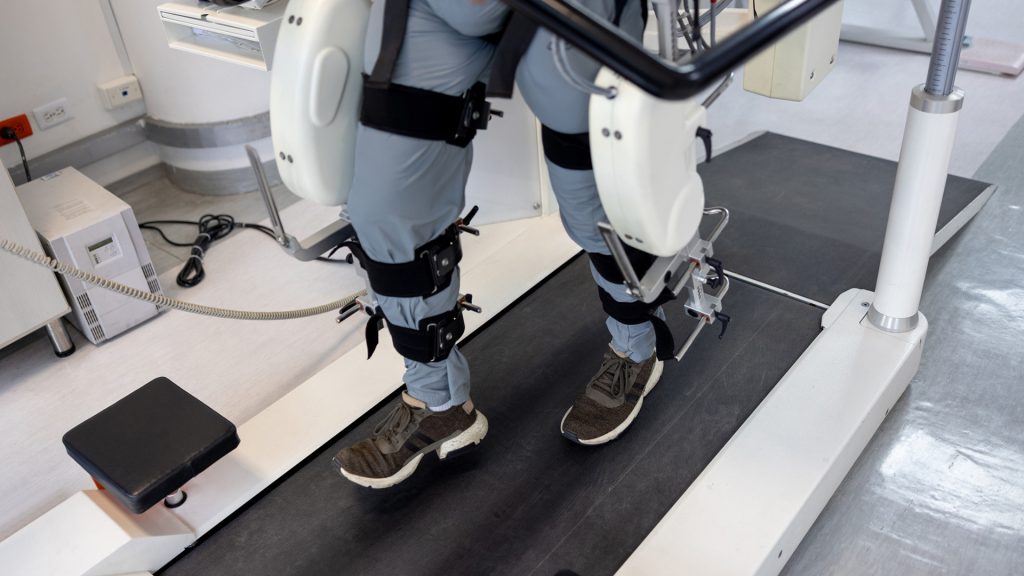
Here, exoskeletons are not promising productivity. They are promising functional recovery, mobility, and quality of life.
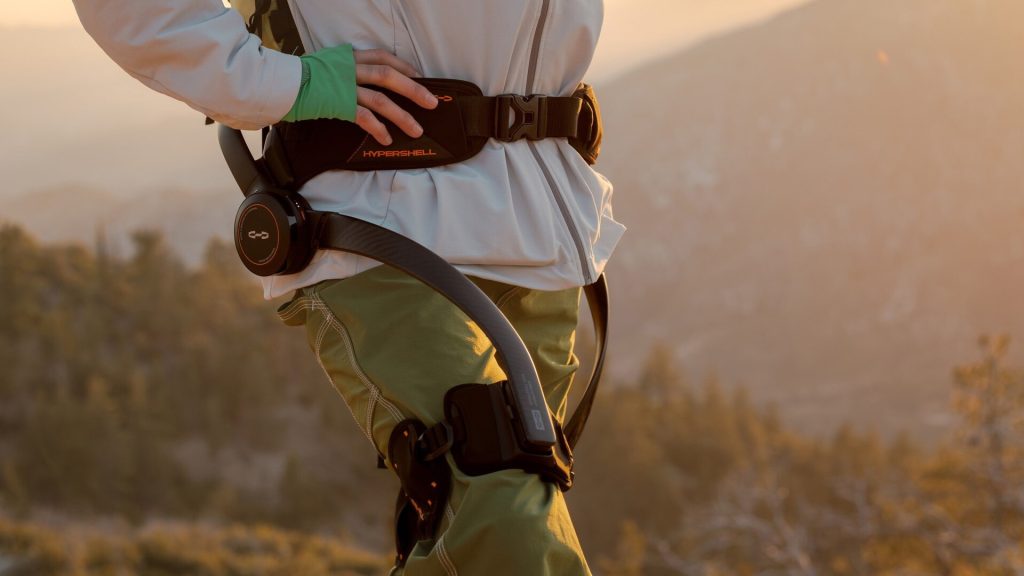
Post-stroke rehabilitation. Gait support. Early mobilization. Assistance for patients with muscular weakness or neurological conditions.
But the moment a device enters the medical field, complexity increases dramatically.
- Software validation
- Risk management
- Traceability
- Technical documentation
- Long-term reliability
- Cybersecurity
- MDR and FDA compliance
And this is where many hardware startups discover how difficult it is to transform a convincing prototype into a true medical device. Because the challenge is not simply making it work. It is making it:
- repeatable
- safe
- validatable
- manufacturable
- maintainable
- clinically acceptable
- In other words, industrializing robotics.
Manufacturing Is Evolving Too
One of the most interesting aspects of modern exoskeletons is that they force traditionally separate disciplines to coexist inside the same product.
- Mechanics
- Soft materials
- Electronics
- Engineering plastics
- Sensors
- Human-machine interfaces
All integrated together.
And this creates highly specific manufacturing challenges:
- soft-touch overmolding
- reliable assemblies under continuous mechanical stress
- sweat and cleanability management
- fatigue and repeated-flex testing
- compact electronics integration
- lightweight yet structurally robust housings
The closer exoskeletons move toward the human body, the harder they become to manufacture properly. And this is probably why integrated partners capable of combining design, engineering, and manufacturing are becoming increasingly strategic.
The Interesting Phase Starts Now
Perhaps the most interesting shift is this: exoskeletons are slowly stopping being technological demonstrations.
They are entering the much harder phase of becoming real products.
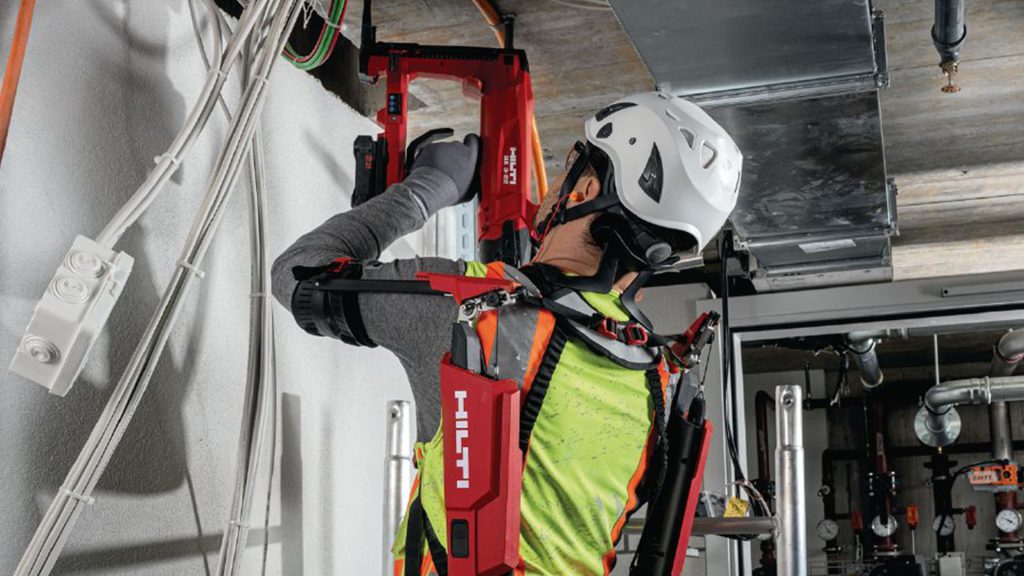
And real products must deal with challenges that are far less cinematic than science fiction:
- comfort
- cost
- regulation
- maintenance
- supply chains
- usability
- long-term reliability
The next major evolution will probably not come from the most extreme or theatrical systems.
It will come from the devices capable of integrating naturally into the daily lives of workers, patients, and clinical environments. Less spectacle. More real-world adoption. And that is usually the moment when a technology truly begins to mature.