
From a technical perspective, spirometers seem straightforward—a patient exhales, and a device measures airflow and volume.
But behind that simple action lies a highly complex system. Developing a spirometer that is accurate, compliant, manufacturable, and user-friendly is anything but easy.
At Creanova, we’ve learned this firsthand by working side by side with MedTech innovators, helping them turn complex respiratory measurement concepts into certified and market-ready products.
Discover how Creanova helped MIR develop SmartOne OXI®, a compact respiratory device that combines spirometry and pulse oximetry in a single user-friendly product. Read the full case study: SmartOne OXI® – Combined Oximeter & Spirometer
What Is a Spirometer?
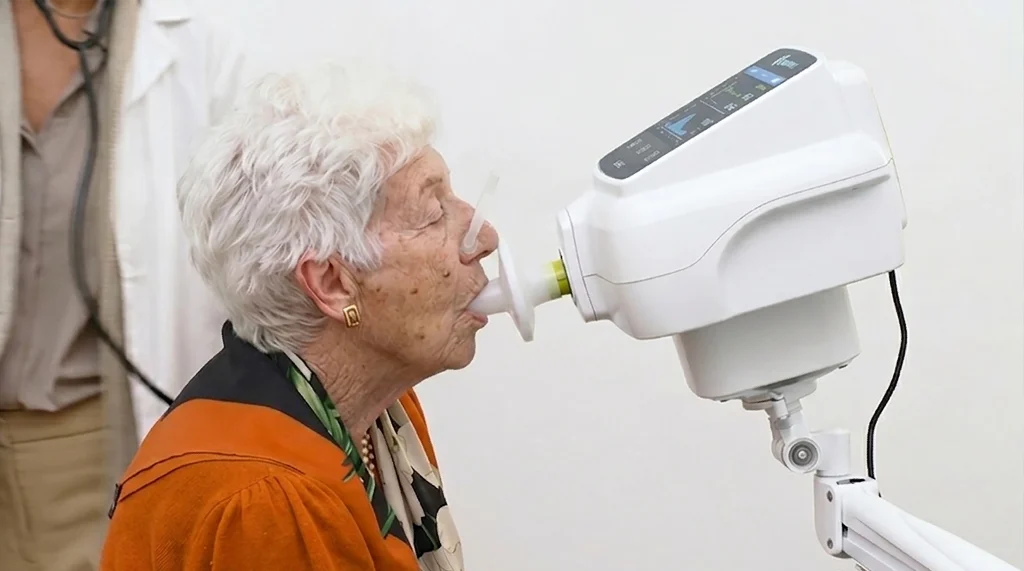
A spirometer is a medical device that measures lung function, specifically the volume and flow of air that can be inhaled and exhaled. It is widely used for diagnosing respiratory conditions such as COPD, asthma, and pulmonary fibrosis.
There are different types of spirometry techniques—such as turbine, ultrasonic, and pneumotach—each with its own engineering challenges and cost-performance trade-offs.
At Creanova, our experience extends beyond traditional spirometry to advanced respiratory diagnostic technologies such as pulmonary oscillometry, enabling the development of innovative solutions for comprehensive lung function assessment.
Key Challenges in Spirometer Development
1. Accuracy of Measurement
Small variations in pressure or flow sensors can significantly impact diagnostic reliability. Developing a device that ensures reproducible results across all patient types (from children to elderly COPD patients) is a major engineering hurdle. Sensor selection, calibration algorithms, and environmental compensation all require careful integration.
2. Hygiene & Reusability
Infection control is critical. Designing a device that allows for either safe reusability or low-cost disposable components (like flow sensors or mouthpieces) must comply with ISO 26782 and EN 60601 standards and consider the realities of clinical workflows. We often support clients in finding that balance between safety, cost, and environmental sustainability.
3. Patient Interface Design
User-friendly mouthpieces and ergonomic form factors are essential. Spirometry tests rely on patient cooperation—so clear guidance, intuitive design, and minimal discomfort make a big difference in the quality of the test.
At Creanova, our industrial designers in Como collaborate closely with engineers to design not only functional but also emotionally accepted products, increasing user compliance and accuracy.
4. Data Handling & Connectivity
Modern spirometers are no longer stand-alone devices. Bluetooth, USB, or even cloud integration is common. Systems need to be secure, fast, and compliant with GDPR and medical data handling regulations.
5. Calibration and Long-Term Stability
Over time, even high-quality sensors can drift. So you might need to integrate software-based zeroing, user alerts for recalibration, and robust QA/QC mechanisms in the embedded software to maintain long-term performance.
6. Regulatory Compliance
Like all Class IIa medical devices in Europe (and Class II in the U.S.), spirometers must comply with MDR, ISO 13485, and the IEC 60601 family of standards.
We can support each phase with our quality assurance team—from risk analysis (ISO 14971) to validation and documentation.
From Design to Manufacturing: One Team, One Flow
Whether you’re creating a handheld device for home use or a sophisticated desktop unit for hospital diagnostics, Creanova’s integrated team helps you go from idea to scalable production.
We’ve developed spirometers with:
- Compact PCBAs
- Injection-molded housings with cleanroom assembly
- Disposable and autoclavable components
- Custom test benches for production validation
Why We Do It
Because health is everything.
A spirometer may look like just another diagnostic tool, but it can be the first line of defense against life-threatening lung diseases. We believe that when a medical device reaches the hands of healthcare professionals and improves someone’s life, that’s success.
And that’s why we work with discipline, passion, and precision every day.
Ready to Build a Better Spirometer?
If you’re developing the next generation of respiratory care solutions, let’s talk.
Creanova brings 25+ years of experience in MedTech design, engineering, and manufacturing — all under ISO 13485.