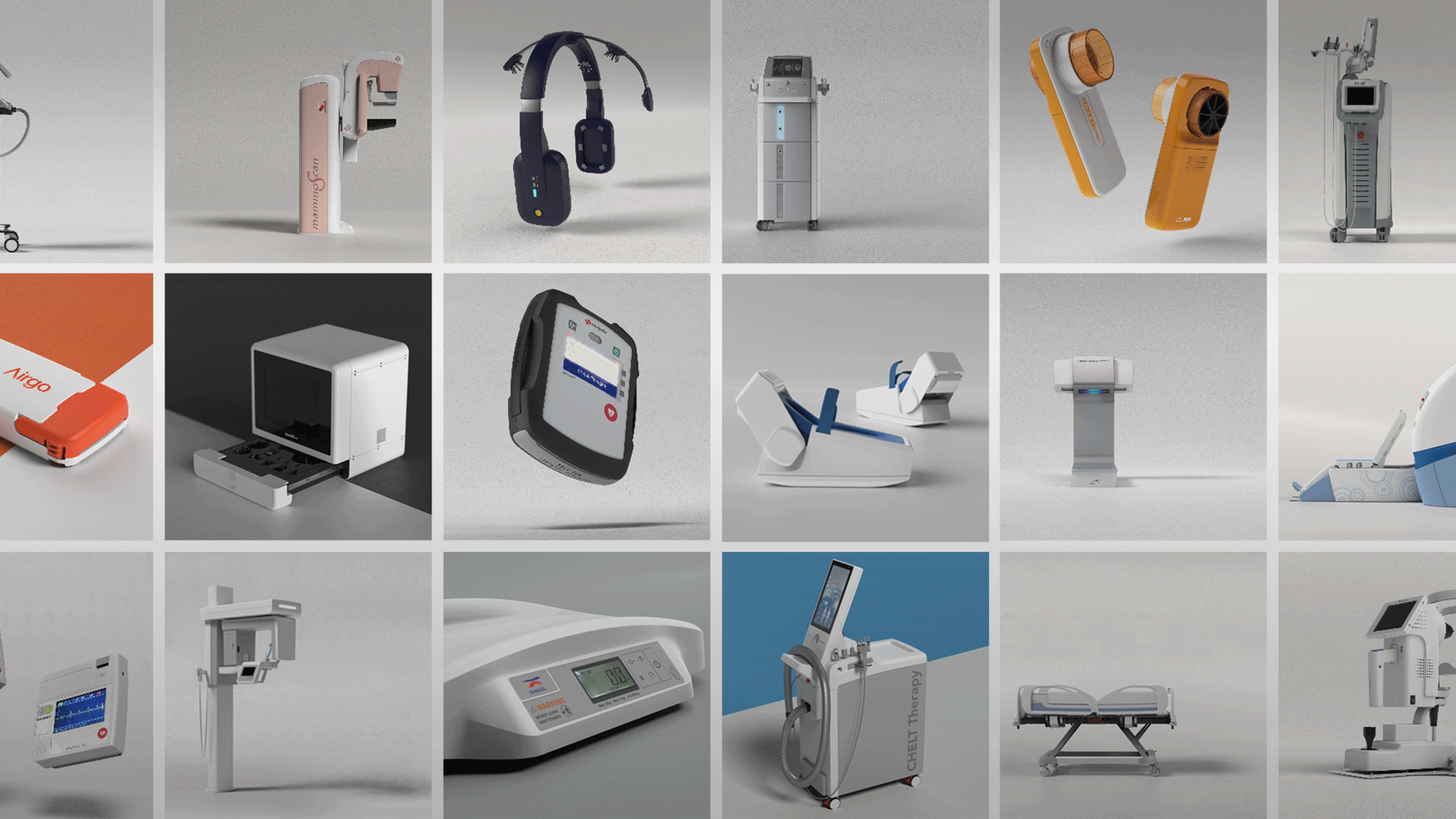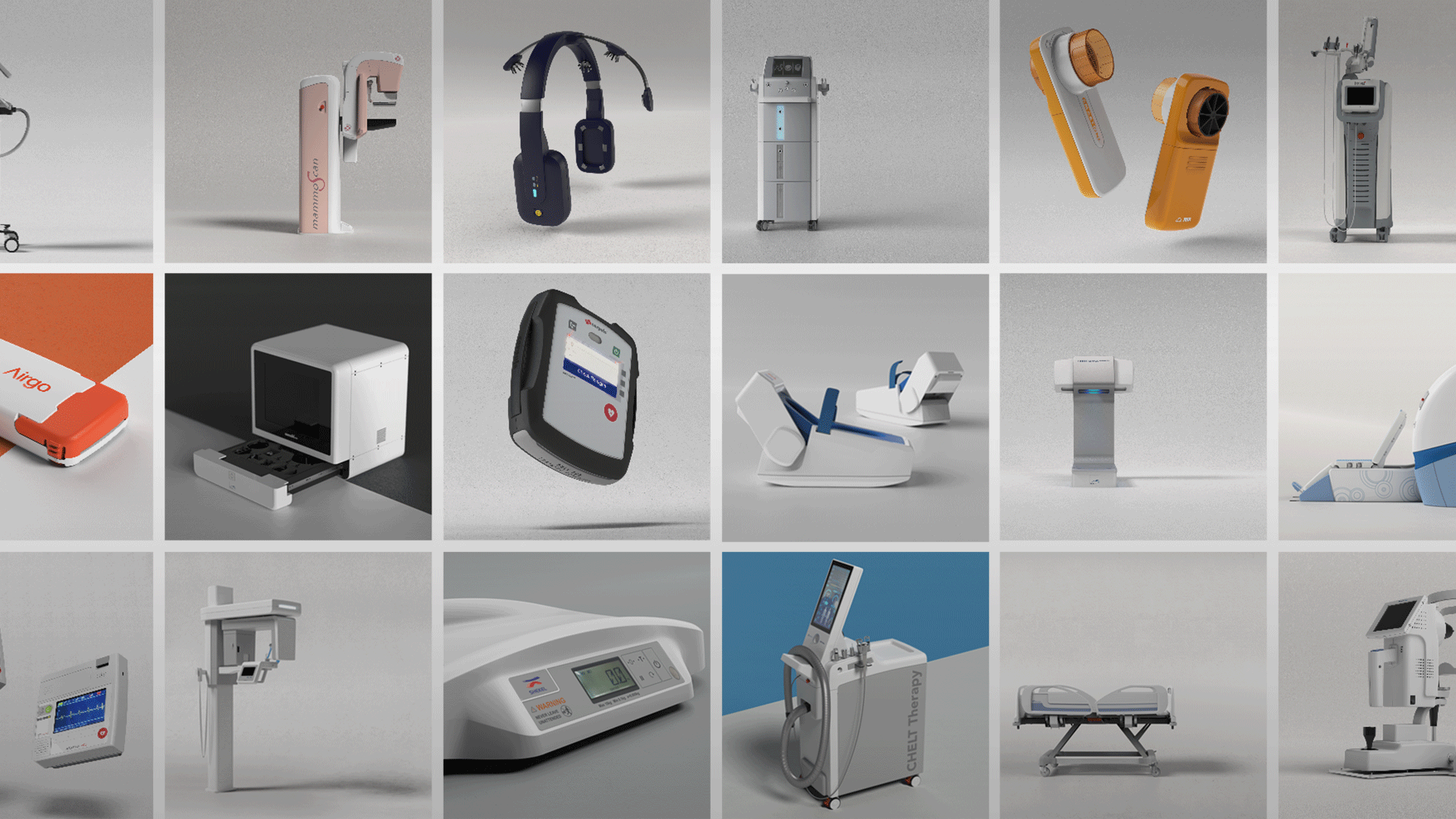
Bringing a new medical device to market is not simply about transforming an idea into a functional product. Every technical decision made during the early development phases has direct consequences on costs, timelines, regulatory compliance, quality, scalability, and long-term manufacturability.
Among these decisions, selecting the right production technology is one of the most strategic. Injection molding, CNC machining, additive manufacturing, or hybrid production approaches are not universally “better” solutions. The right choice depends on the device architecture, expected production volumes, regulatory constraints, material requirements, and the maturity of the project itself. The real question is:
Which production technology allows the device to reach the market in the most sustainable, compliant, scalable, and industrially efficient way?
Start from Product Requirements, Not from the Technology
One of the most common mistakes in medical device development is selecting a manufacturing technology too early, before the product requirements are fully defined. Production strategy should always derive from the device’s functional, regulatory, and industrial needs.
Before evaluating manufacturing processes, it is essential to clarify:
- Intended use and user context
- Expected device lifespan
- Mechanical and dimensional requirements
- Material compatibility
- Sterilization constraints
- Regulatory pathway
- Forecasted production volumes
- Future scalability expectations
A wearable homecare device, for example, requires completely different production logic compared to a surgical instrument or a disposable consumable. The earlier these constraints are identified, the easier it becomes to avoid redesigns, tooling changes, validation delays, and unnecessary industrial costs later in the project.
Regulatory Requirements Influence Manufacturing Choices
In the medical sector, manufacturing decisions cannot be separated from regulatory compliance. Production technologies must support the quality, traceability, and repeatability requirements imposed by standards and regulations such as:
- ISO 13485
- FDA Quality System Regulation (QSR)
- EU MDR
- IEC and ISO product-specific standards
This impacts not only the final production process but also:
- Material selection
- Supplier qualification
- Process validation
- Documentation structure
- Quality controls
- Traceability systems
For example, some additive manufacturing processes may offer incredible geometric freedom but can introduce additional complexity in validation, repeatability, or material certification. Similarly, choosing an injection molding partner without strong medical manufacturing experience can generate significant compliance risks later during audits or production transfer. Manufacturing strategy, therefore, is never just an engineering decision. It is also a regulatory and risk-management decision.
Evaluating the Main Production Technologies
Each manufacturing technology brings different advantages, limitations, costs, and scalability profiles. The goal is not choosing the “most advanced” technology, but the most appropriate one for the specific stage and objectives of the device.
1. Additive Manufacturing (3D Printing)
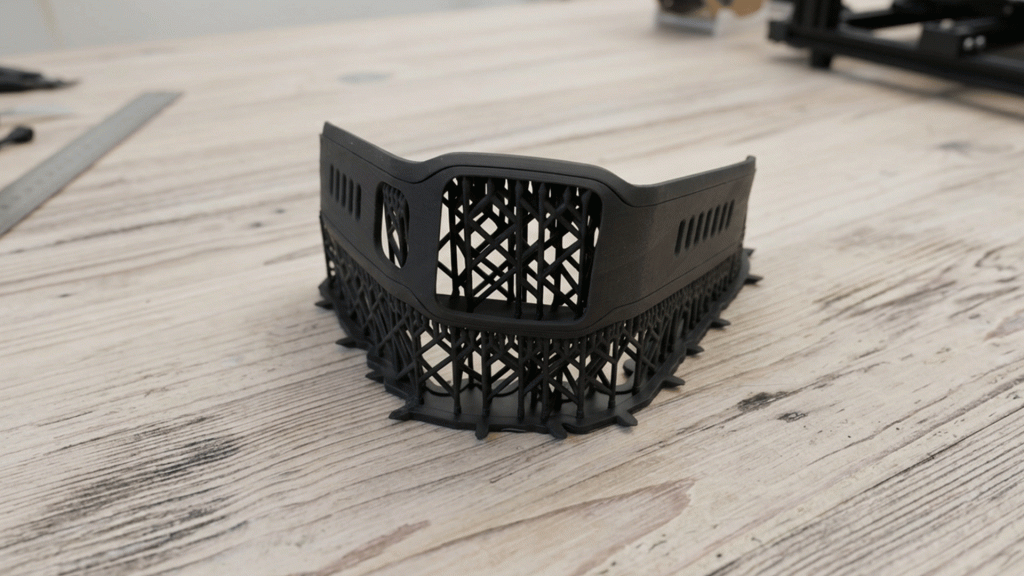
Additive manufacturing has become increasingly relevant in MedTech thanks to its flexibility and rapid iteration capabilities.
It is particularly useful during:
- Early prototyping
- Ergonomic validation
- Functional mockups
- Low-volume production
- Patient-specific applications
Complex geometries that would be difficult or expensive to achieve with traditional manufacturing can often be produced quickly through additive processes.
Advantages:
- Rapid prototyping and iteration
- Low upfront investment
- Design freedom
- High customization potential
Limitations:
- Limited material options
- Surface finish constraints
- Reduced scalability for high volumes
- Validation and repeatability challenges in some applications
Best suited for:
- Prototypes
- Personalized devices
- Early development phases
- Low-volume production
2. Injection Molding
Injection molding remains the benchmark for high-volume medical device production, especially for plastic components.
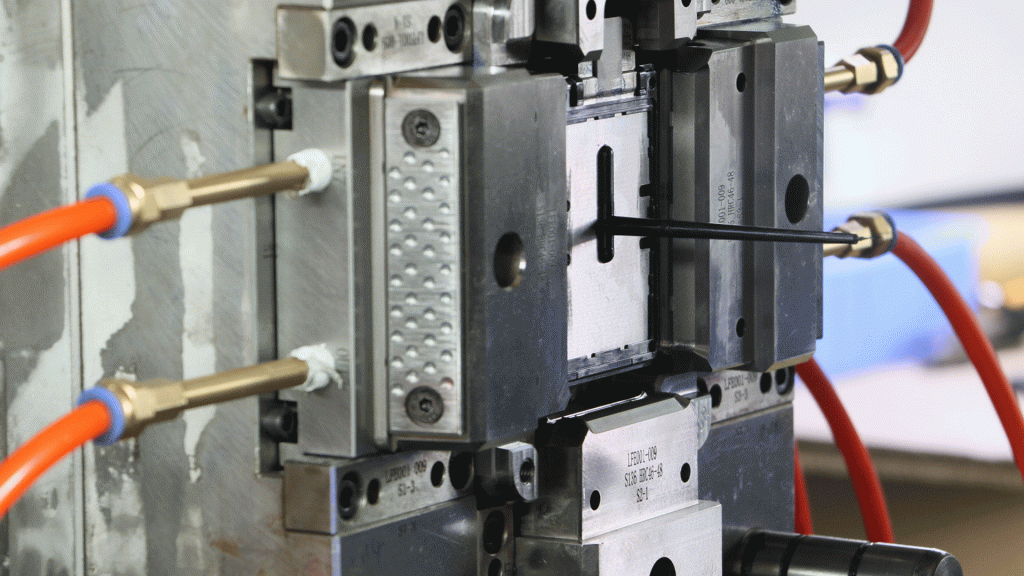
Once tooling is validated, the process enables highly repeatable, scalable, and cost-efficient production.
It is particularly suitable for:
- Disposable medical devices
- Enclosures
- Wearable housings
- Consumables
- High-volume components requiring tight consistency
Advantages:
- Excellent repeatability
- High production efficiency
- Strong surface quality
- Broad material compatibility
- Reduced per-unit cost at scale
Limitations:
- High tooling investment
- Lower flexibility for design modifications
- Longer industrialization lead times
Best suited for:
- Medium-to-high production volumes
- Mature product architectures
- Long-term industrial production
In medical device development, injection molding should not be considered only as a production step.
It often influences the product architecture itself, including wall thicknesses, assembly logic, draft angles, sealing strategies, and part subdivision.
3. CNC Machining
CNC machining is frequently used when precision and tight tolerances are critical. Unlike additive manufacturing, CNC is a subtractive process that removes material from solid blocks or bars to create highly accurate components.
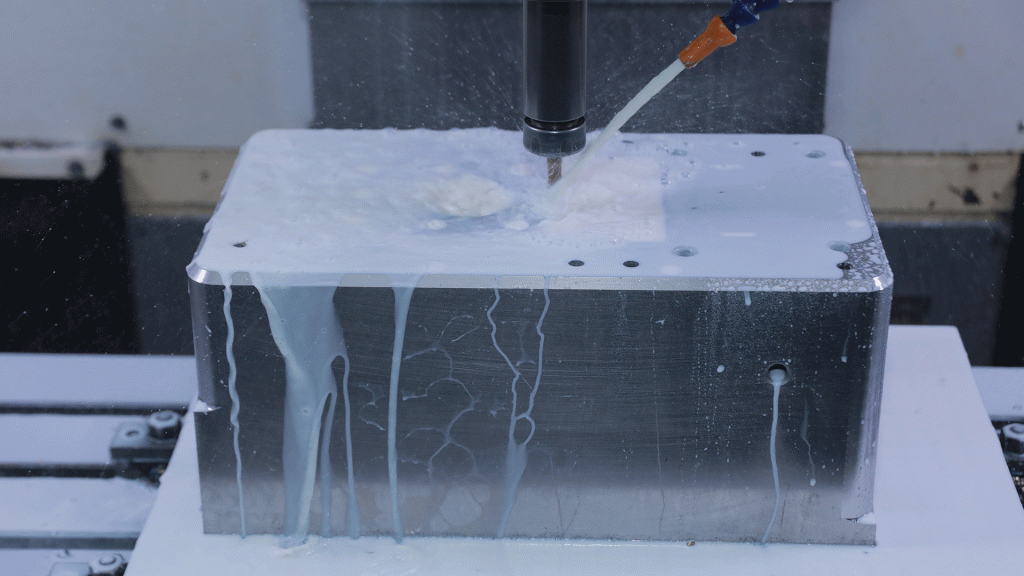
It is widely adopted for:
- Surgical instruments
- Implantable components
- Metal parts
- Functional prototypes
- Precision mechanical systems
Advantages:
- High precision
- Excellent dimensional tolerances
- Wide material compatibility
- Strong mechanical performance
Limitations:
- Higher per-unit cost at scale
- Longer machining times
- Material waste compared to additive methods
Best suited for:
- Precision components
- Functional prototypes
- Medium-volume production
- Critical mechanical parts
Production Volume Changes Everything
Production volume is one of the strongest drivers when selecting manufacturing technology. A solution that is economically perfect for 500 units may become unsustainable at 500,000 units.
In general:
| Production Volume | Most Suitable Technologies |
| Low volume | Additive manufacturing, CNC machining |
| Medium volume | Hybrid approaches, soft tooling |
| High volume | Injection molding |
However, the decision should also consider future growth. A startup launching an MVP may initially rely on additive manufacturing or CNC machining to reduce investment and accelerate market entry. But if commercial traction is expected, the architecture should already anticipate future migration toward scalable industrial production. This transition is often where many projects encounter unexpected delays or redesign costs.
Manufacturing Strategy Is Also Risk Management
Production technology selection directly impacts supply chain resilience and industrial risk. Medical devices operate inside highly regulated ecosystems where disruptions can have serious commercial and regulatory consequences.
When evaluating manufacturing partners and technologies, it is essential to assess:
- Supplier reliability
- Component availability
- Material traceability
- Process repeatability
- Quality systems
- Scalability capacity
- Geographic manufacturing strategy
Working with experienced MedTech manufacturing partners can significantly reduce risks related to:
- Validation delays
- Supplier inconsistency
- Regulatory non-compliance
- Production bottlenecks
- Design transfer issues
This becomes particularly important when transitioning from development to industrial manufacturing.
The Best Technology Depends on the Project Stage
One important reality is often overlooked:
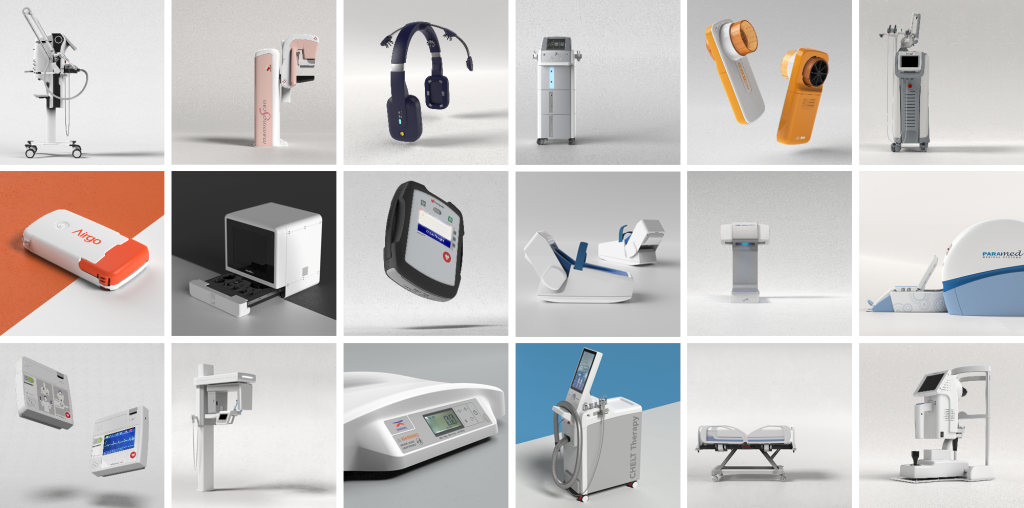
The “right” production technology can change during the project lifecycle. Early-stage prototypes may require speed and flexibility. Pre-production phases may prioritize validation and testing. Industrialization phases may focus on scalability, repeatability, and cost optimization. For this reason, many successful medical devices adopt hybrid strategies across development stages.
A device may begin with:
- 3D-printed prototypes
- CNC-machined functional parts
- Soft tooling validation
…and later transition toward fully industrialized injection-molded production.
The key is ensuring that every step supports the long-term industrial vision of the product.
Conclusion
Choosing the right production technology for a medical device is not simply a manufacturing decision. It is a strategic decision that affects usability, certification, scalability, costs, timelines, and commercial viability.
The most effective production strategy is the one that balances the following:
- Technical feasibility
- Regulatory compliance
- Industrial scalability
- Market timing
- Long-term sustainability
In MedTech, successful products are rarely the result of isolated technical choices. They emerge from the integration of design, engineering, regulatory thinking, and manufacturing expertise from the earliest development phases. For this reason, involving experienced development and manufacturing partners early in the process can dramatically improve both speed to market and industrial robustness.